
Artificial intelligence (AI) is one of the coolest technologies out there, and it’s rapidly evolving into something that’ll change how we live, work, and interact with technology. Yet, most of us don’t know what it is, how it works, or what it’s capable of.
Until ChatGPT came around, it seemed like actual usable AI was a few years away. Now that it’s here, it’s clear that things are about to change faster than we can anticipate.
Don’t worry, though. AI isn’t set to take over the world, at least not in its current state. But it is about to revolutionize industries. From education and entertainment to finance, transportation, and even ecommerce, AI is already making waves across the world.
But what exactly is AI? More importantly, how does it work? Let’s find out.
What is AI?

Artificial intelligence (AI) is a branch of computer science that deals with creating machines that perform tasks that usually require human intelligence. In other words, it’s an approach to creating machines that can think, learn, and problem-solve like humans.
Humans can recognize speech, understand language, and make decisions because we spend years learning to do that. AI takes a similar approach to teaching machines, except it doesn’t need as much time.
Machines can process and analyze vast amounts of data at lightning speeds. They can learn and adapt on their own and improve exponentially faster than we humans can.
That doesn’t mean machines are more “intelligent” than humans. Machines and AI are incredibly efficient at some tasks. However, they’re still far from becoming like Jarvis in Iron Man or Skynet in the Terminator series.
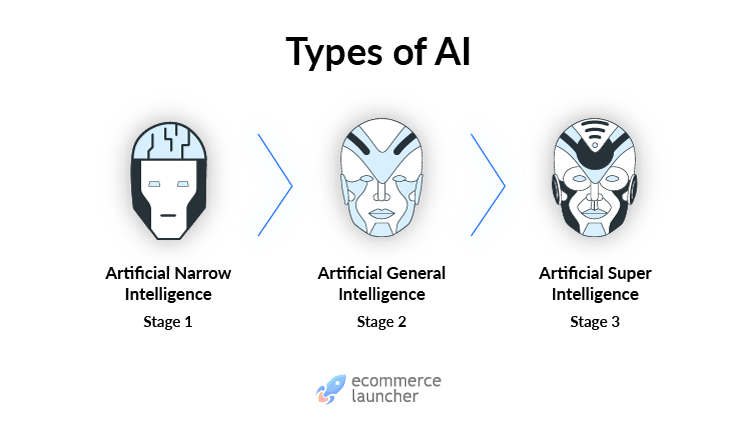
The AI systems we currently use, whether that’s virtual assistants like Alexa and Siri or large language models (LLM) like ChatGPT, are trained for specific tasks.
They might be good at what they’re designed to do, but they can’t behave or think the way we humans do.
For that reason, scientists classify them as “weak” or “narrow” AIs.
Fictional AIs like Jarvis and Skynet represent what an Artificial General Intelligence (AGI) and Artificial Super Intelligence (ASI) would look like.
While ChatGPT and similar AI models have progressed exponentially over the last few years, they’re still years away from becoming an ASI. And while some scientists are working on creating ASI/AGI, it’s unlikely to happen soon.
How does AI work?
At its core, AI is about processing vast amounts of data to teach machines how to make predictions or decisions.
AI systems use algorithms, which are instructions to understand how to perform a specific task, and models to predict and decide. The algorithms can be anything from something as simple as adding numbers or as complex as analyzing images or language.
For example, you could show an AI model thousands of pictures of animals and tell it which ones are cats and which ones are not to train it to recognize cats.
The model would then learn the patterns distinguishing cats from other animals and use that knowledge to identify cats in new photos.
That’s a bit like how we humans learn, except AI needs a lot more high-quality data than we do. That’s one reason why companies invest heavily in collecting user data — so they can train their AI models to make better suggestions.
Another important aspect of AI is that it can learn and improve over time. As more data is collected and fed into the system, the AI models adjust and improve their predictions. This is known as machine learning, and it’s what makes AI so powerful.
Machine learning is one subset of artificial intelligence. There are many other subsets or sub-branches of AI, each focusing on a different technique or problem.

Here’s a list of other subsets of AI you might come across as you learn about AI:
- Deep learning: a subset of machine learning that uses artificial neural networks to simulate the behavior of the human brain.
- Neural networks: a computing system modeled on the structure of the human brain that can perform complex calculations and make decisions based on input data.
- Natural language processing: a branch of AI that focuses on teaching machines to understand and process human language.
- Computer vision: a subset of AI that involves teaching machines to interpret and analyze visual data.
- Robotics: the use of AI and other technologies to create intelligent machines that can perform tasks traditionally done by humans.
- Expert systems: computer programs designed to mimic the decision-making abilities of a human expert in a particular field.
- Reinforcement learning: a type of machine learning where an agent learns to make decisions by interacting with an environment and receiving rewards or penalties for different actions.
These techniques are part of the broader field of artificial intelligence. They are used to teach machines how to make decisions like humans.
Applications of AI: Five real-world examples of how AI is shaping our world
AI is everywhere. It’s deeply ingrained in everything from entertainment to healthcare and finance. Each time you search for something on Google or scroll your feed on TikTok and Instagram, an AI algorithm curates your recommendations to keep you engaged.
But that’s only one example of how AI is applied in our everyday lives. Here are other applications of AI and how they help solve complex problems for us.
1. Natural Language Processing

Natural Language Processing, or NLP, is a branch of AI that teaches machines to understand and process human language.
Think about how we use language, from texting and chatting with friends to reading articles and writing emails. NLP allows computers to understand this language (and its context) the way we do, which is incredibly powerful.
One of the most common applications of natural language processing is in the form of virtual assistants like Alexa or Siri. They use natural language processing to understand spoken commands and respond with appropriate actions.
For example, if you ask Siri where Paris is, it relies on NLP to understand that you’re referring to Paris, the place, and not Paris Hilton, the celebrity. Based on that understanding, it’ll respond with an answer like “Paris is in northern-central France”.
2. Image and Speech Recognition

Image and speech recognition is powered by complex algorithms and models that allow machines to “see” and “hear” like humans.
Image recognition algorithms typically use deep learning models called “convolutional neural networks” to analyze images. They train on millions of images to recognize objects and patterns and use that information to identify objects in new pictures.
The best example of AI image recognition in everyday use is Google’s Photos app, which identifies people and even animals inside images uploaded to the app.
Speech recognition works a bit differently. Speech recognition algorithms usually use different techniques to convert speech into text. Recurrent neural networks are the most common way to recognize sounds and convert them into words.
Besides using speech recognition for voice search, companies like Amazon and Google use speech models to let users control smart home devices, play music, and answer questions.
3. Robotics
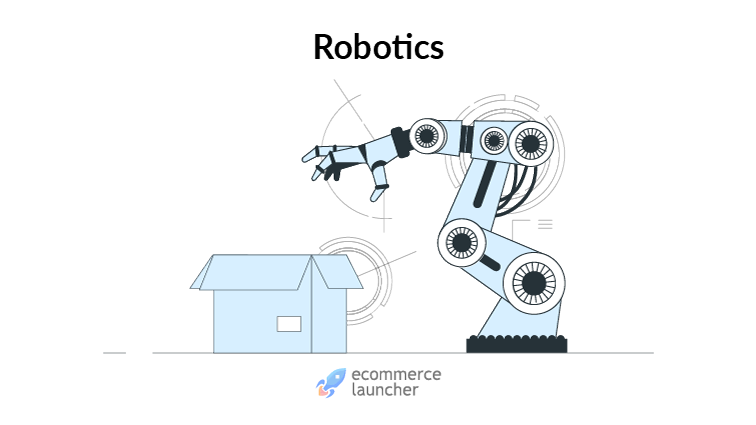
AI is also used in robotics to create machines that can sense their surroundings and make decisions based on changes in their environment. Robots use sensors like cameras and microphones to collect and analyze data and make decisions.
AI-powered robotics involve different subsets, like NLP and machine learning, working together to create intelligent machines.
The best example of AI in robotics is the robots from Boston Dynamics. Their robots walk, run, and even do backflips using cameras, sensors, and AI.
Here’s a YouTube video they released earlier this year to showcase their robots’ capabilities:
4. Finance

AI is also used in finance to improve investment decisions and reduce risk.
For example, AI algorithms can analyze financial data to identify patterns and predict future market trends. AI is also used to detect fraudulent transactions and reduce the risk of financial crime.
AI algorithms can analyze large amounts of data and detect patterns and anomalies. And unlike us humans, AI can work round the clock to prevent fraud even before it happens.
Companies like Stripe and Mastercard have been using AI to prevent payment fraud for several years now.
Besides financial fraud, AI is also being used for algorithmic trading.
Goldman Sachs, for instance, uses machine learning algorithms to predict the future prices of financial assets so their traders can make more informed investment decisions.
5. Ecommerce

One of the most exciting applications of AI is to help ecommerce companies increase productivity, streamline operations, and reduce costs.
Even though we’re in the early stages of the AI revolution, there are already hundreds of potential uses for AI in ecommerce, such as:
- Generating product descriptions and landing page copy.
- Writing social media posts.
- Brainstorming ideas for influencer outreach.
- Troubleshooting website errors.
- Creating chatbot scripts.
What’s impressive is that virtually every SaaS company is rapidly integrating AI into their tools to help their users. Some like 10Web even allow you to build an online store using an AI website builder.
I’ve written a detailed article covering the top AI tools for ecommerce. Make sure you give that a read to learn ways you can turbocharge your productivity.
The ethical concerns of AI
While AI can potentially transform industries and improve our lives in many ways, it also presents some ethical concerns.
Some of the earliest concerns with AI have been about bias and discrimination. One example of that concern is Amazon’s AI-powered recruiting tool which demonstrated bias against women in 2018.
The reason? Their tool was trained on resumes submitted over 10 years, mostly from male applicants.
AI algorithms are only as good as the data used to train them. And although in an ideal world, we’d train AI using curated data sets, the reality is far different.
While pursuing technological superiority, AI companies opt for an “unsupervised learning” approach that trains AIs on unclassified, unlabelled data.
That approach is quicker but also leads to biases.
Another more recent concern is about AI’s impact on employment because AI, for all its current flaws, is proving itself far superior than we anticipated.
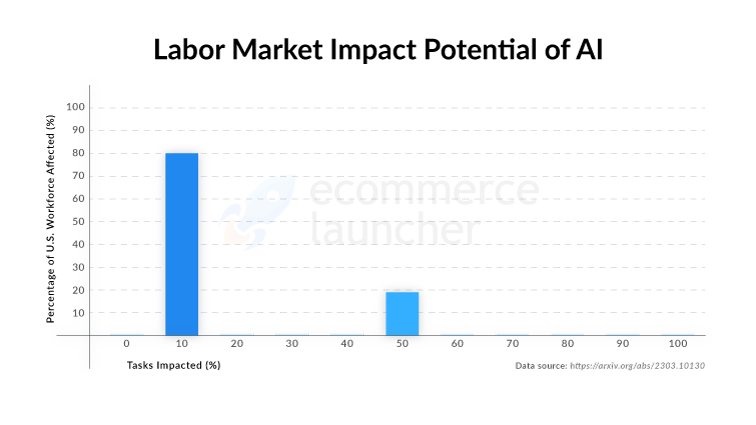
A recent study by OpenAI, OpenResearch, and the University of Pennsylvania on the implications of Generative Pre-trained Transformers (GPTs) on the U.S. labor market revealed some serious concerns.
The study found that technologies built using GPT and other LLMs could impact 10% of tasks for 80% of the U.S. workforce. That, in turn, could have major economic, social, and policy implications.
It also doesn’t help that corporations are pursuing AI advancements with little concern for ethics. According to some reports, Microsoft laid off its entire AI ethics team in early 2023.
Addressing these concerns isn’t going to be easy. AI advancements are happening faster than ever and with little oversight.
Governments will need a multi-disciplinary approach to address the concerns to ensure that AI is used responsibly and ethically, which benefits everyone.
What is GPT?
GPT, short for Generative Pre-trained Transformer, is an AI technology that understands and generates human language using natural language processing.
It uses a neural network called a “transformer”, which processes language much better than traditional models.
GPT is a part of the broader category of large language models, which are AI models capable of natural language processing.
But what’s so great about GPT and why it’s so popular is that, until it came along, most language models were trained to perform specific tasks.
GPT was one of the first models to adopt a mix of supervised and unsupervised learning at scale. It wasn’t long after the 2018 research paper published on OpenAI’s website that more capable versions trained on exponentially larger amounts of data came around.
What’s the fuss about GPT?
The latest generation, GPT-4, was released by OpenAI on March 14, 2023. Its release came only a few months after ChatGPT launched publicly in late November 2022.
Despite how recent both models are, ChatGPT is one of the most popular technologies in the world. In fact, according to Swiss bank UBS, ChatGPT reached 1 million active users within a week after its launch.
To give you some perspective, Instagram took two and a half months to reach the same milestone.
Recent GPT models, GPT-3 and GPT-4, were trained on massive amounts of data from all over the internet.
The GPT-3 model is built with 175 billion parameters, more than 100 times that of GPT-2. In contrast, GPT-4 is built with over 100 trillion parameters.
Simply put, they’re more accurate and capable of performing more advanced tasks. But that isn’t why they’re so popular.
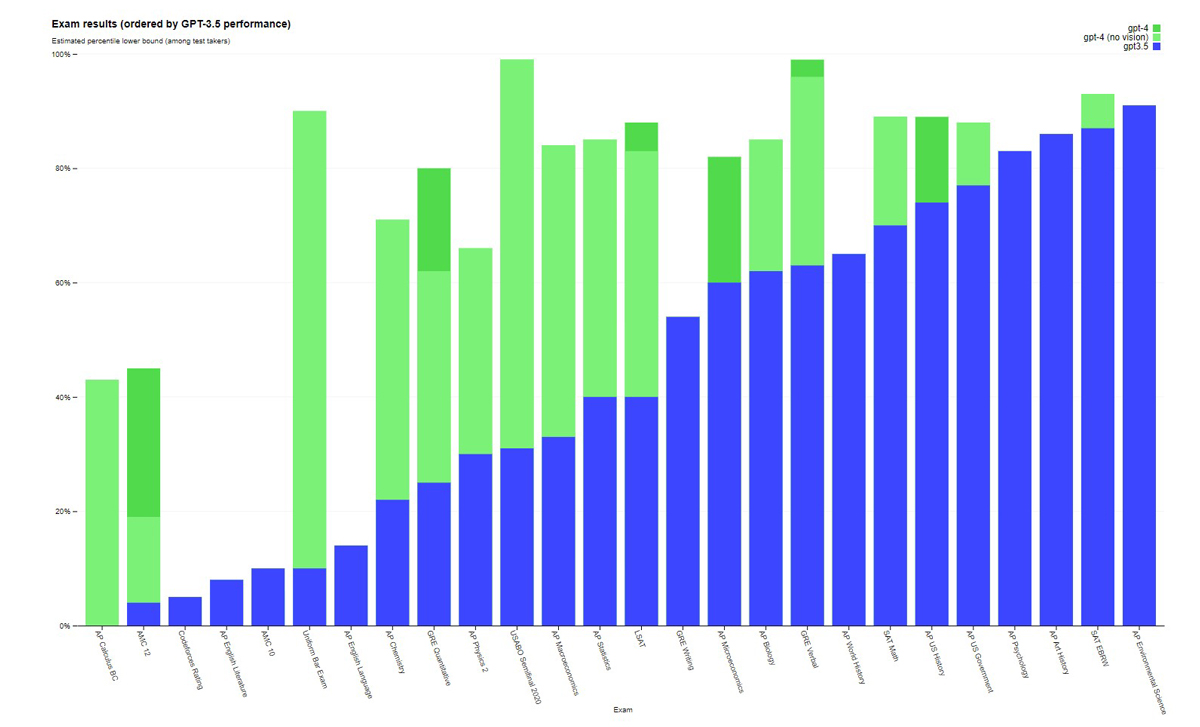
The thing is, until ChatGPT came around, we’d all heard about GPT and its capabilities. But the only people with access to it were developers who knew how to access its APIs.
That’s why the closest most people came to seeing its capabilities was through AI content writing tools.
It was only after ChatGPT’s release that people experienced the capabilities of GPT firsthand.
OpenAI built what’s essentially a chat interface on top of their AI model so everyday folks like us could interact with it.
That — in addition to ChatGPT being a free tool — made it extremely accessible and allowed people to experience its capabilities.
Want to learn how you can use ChatGPT to grow your online store? Read my article on using ChatGPT for ecommerce where I share 30 ways you can leverage AI for online growth. I also share prompts you can copy and paste into ChatGPT.
The takeaway: AI is here to stay
AI is one of the most fascinating technologies out there today. The more I read about AI and talk to people involved in the industry, the more I realize that AI has the potential to transform our world in ways we can’t even imagine yet.
The current and potential applications of AI in healthcare, finance, customer service, and virtually every digital aspect of our lives are limitless. But for AI to benefit society at large, it needs to be accessible.
There’s no doubt that we’re about to see a new revolution in the way we live in the coming years. However, what remains to be seen is whether businesses use AI as an enabler or a disruptor.
The best way to prepare for that future is to stay in the know. I’ve curated tons of resources on this site to help make AI more accessible for everyone. Make sure you read them and sign up for my newsletter to keep up with the latest developments.
If you have any questions or suggestions, leave a comment below.
